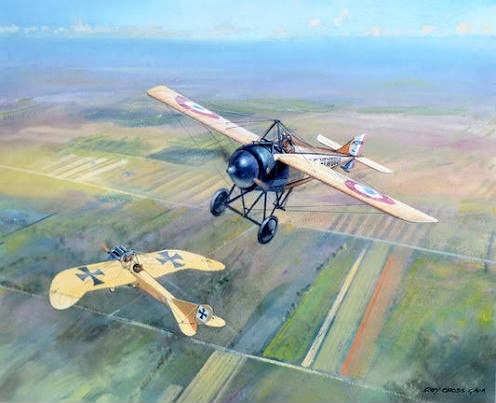
Roy Cross (23rd April 1924 – 24th April 2024), was born in Camberwell, London. As an artist, he was mainly self-taught, although he did attend the Camberwell School of Art. During World War II, he worked for Fairey Aviation, as a technical illustrator for training manuals. Here he honed his skill as an aviation artist. His work involved creating detailed illustrations that provided practical guidance and information to pilots and other aviation personnel. These illustrations were crucial in helping to train new recruits for the Royal Air Force. Cross's skills in technical illustration were a significant asset during the war.
His son, Anthony Cross, writes:- “Since early boyhood, I’ve been aware my dad’s job was a little bit different to the other boys I encountered at school. For a start he was an artist and that conjured up the impression of a Bohemian lifestyle forged perhaps in a rooftop garret in Paris surrounded by huge canvases on easels and scantily clad female models.
The fact my dad worked at home was a novelty as he was there to take me out and to school when invariably the bus didn’t turn up. But unlike the archetypal artist’s studio, his was more like a design office with rows of books, a large drawing board and with pens and airbrush equipment as prominent as brushes and paints.
We still have dad’s first painting of a Spanish galleon which he did in his teens but by 1942 when he was barely 18, dad was in print with line drawings of famous aircraft appearing in the Air Training Corps Gazette, no doubt to fuel the interest of wood-be young fliers at a time when Britain was still desperately in need of pilots.”
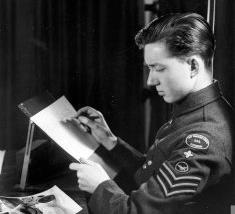
Roy Cross during the Second World War, 1942
“Rather than be called up to join the RAF which potentially could have robbed me of a father and the loss of a treasury of great illustrative artwork, dad’s talents for technical drawing and his passion for aeroplanes were spotted and acted upon. Instead, he joined an aircraft factory to help produce illustrations for manuals to assist aircrew and maintenance personnel, the theory being that a picture speaks louder than a thousand words. Dad finally settled on Fairey Aviation Ltd at Hayes in Middlesex which he could reach by bus, tube and train every day. The Fairey Firefly two-seat Fleet Air Arm fighter was being manufactured at the time and dad completed a large cutaway drawing of the Firefly, his biggest and best work to date.”
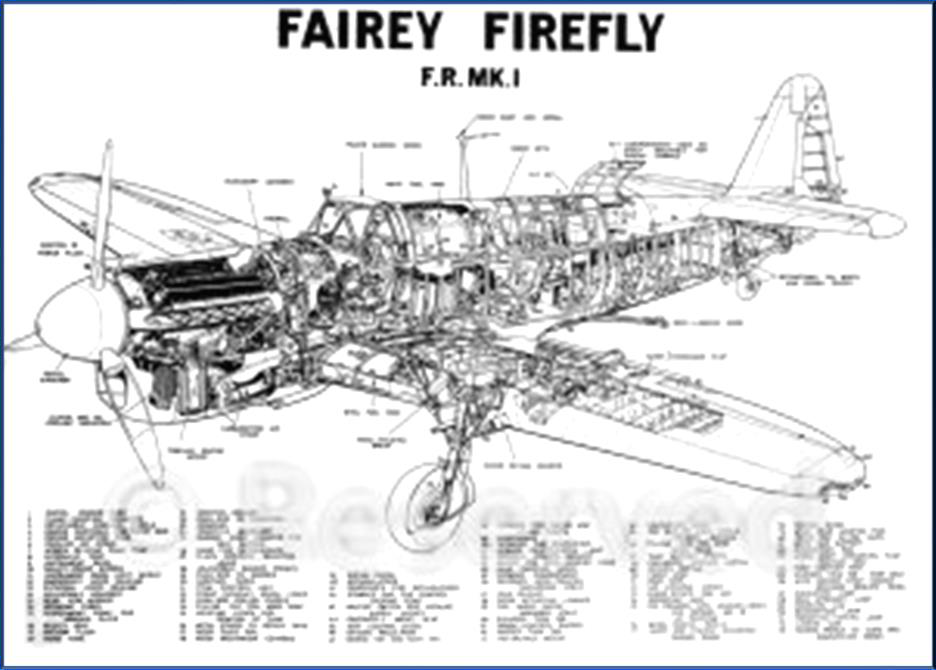
Fairey Firefly Mk.1 cutaway, by Roy Cross
From his work in the Air Training Corps Gazette, he received a commission from Sir Isaac Pitman & Sons Ltd in 1943 to illustrate a book. ‘The Birth of the Royal Air Force, and he twenty-four pictures of WW1 aircraft for the book.
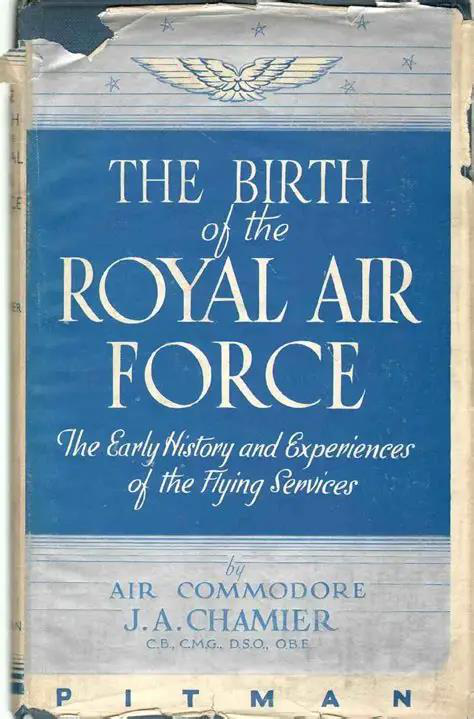
The Birth of the Royal Air Force, published by Pitman, 1943
He progressed from there to producing advertising art for the aircraft industry and other companies. He illustrated for The Aeroplane, where he had cover illustrations published, and the Eagle comic.
In 1952 he joined the Society of Aviation Artists, but it is for his work at Airfix which he is best known. He started in 1964 with the box art for Airfix's Do 217 and his last work for them was the box art for the German heavy cruiser Prinz Eugen, in 1974. In the ten years at Airfix, he produced over two hundred unique images. Much of the original Airfix artwork was destroyed, but it survives on the top of the boxes and on the modelling instructions on many millions of boxes remain in circulation.
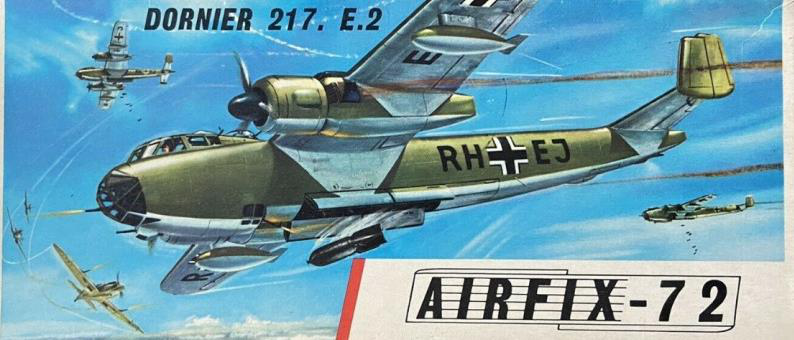
Roy Cross’ first design for Airfix Dornier Do217, 1964
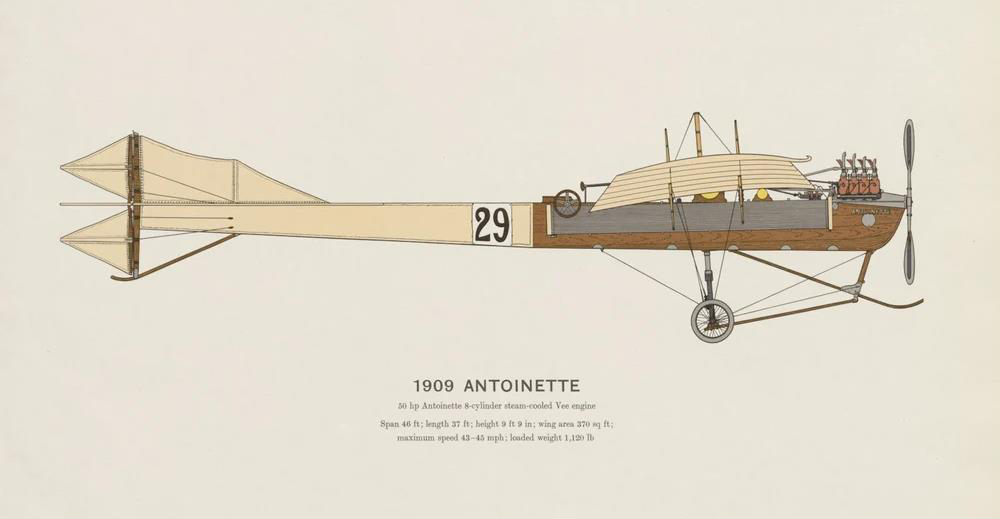
In the 1960’s he was engaged by Hugh Street, of Hugh Evelyn Prints, to produce a range of line drawings in profile. These became, in part due to the 50th anniversary of many early aviation events, and partly due to Edwardian culture being popular and revisited in the media, very popular, and were reprinted countless times as prints, postcards, calendars and plastic and metal wall plaques, which were at the time a popular room or office accessory. He also wrote a book for Hugh Evelyn, ‘ Great aircraft and Their Pilots’, published in 1971.
1909 Antoinette by Roy Cross for Hugh Evelyn, 1962
He also contributed his work to various magazines and organisations such as Shell, Swift magazine, and many others. He was also a great marine artist, producing Airfix battleship images, and other maritime works of art.
Anthony Cross also talked about Roy in his later years:-
“Dad retired from producing artwork on commission in the early 2000s and has since painted more for pleasure, returning at times to perhaps his greatest love, aviation painting.
The centenary of the outbreak of the First World War gave dad the opportunity to paint again some of the old favourites from that conflict and a particularly poignant picture from 2013, in my view one of his best later works, shows a flight of Royal Flying Corps B.E.2a aircraft – ‘the First of the Few’ – crossing the Channel in August 1914 in support of the British Expeditionary Force. Only a small handful of the aircraft crossing the Channel in that fateful flight survived for more than two or three months.”
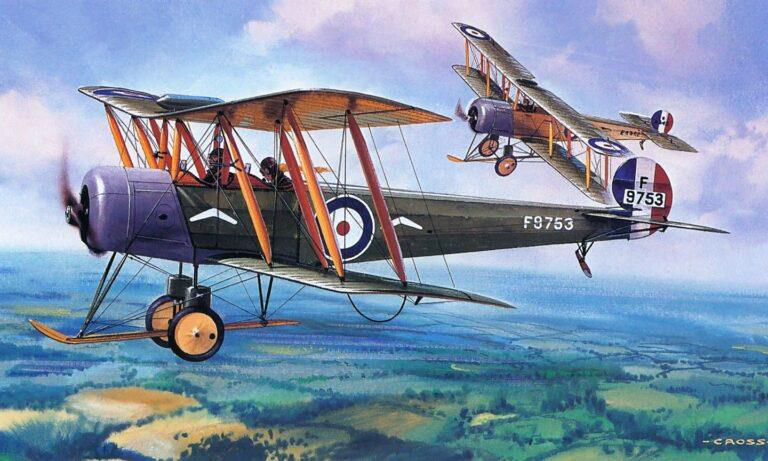
Avro 504’s by Roy Cross.
Cross was interviewed by James May in an episode of the TV series, James May's Top Toys, discussing the changing tastes in box art and the airbrushing out of bombs and explosions from his pictures. Cross died after a short illness on 24th April 2024, one day after his 100th birthday. He has left a lasting legacy in the aeronautical world with his accurate and precise depiction of aeroplanes throughout the ages.
Leave a Reply